Greenhouse gases are naturally occurring and human-made gases that play a vital role in Earth’s climate. Key gases like carbon dioxide, methane, nitrous oxide, and water vapor form a kind of thermal blanket around the planet. They let sunlight pass through to Earth’s surface, where it’s absorbed and then released back as heat. This heat, however, can’t all escape because greenhouse gases trap it, a process known as the “greenhouse effect.” This effect maintains Earth’s average temperature, making it warm enough to support life as we know it.
But maintaining a balance is essential. In recent decades, increased human activities—such as burning fossil fuels and deforestation—have released more greenhouse gases than the natural cycle can handle. This leads to an excess of trapped heat, which contributes to climate change and disrupts ecosystems. While our energy sources have undoubtedly improved quality of life, managing emissions is crucial. By using energy responsibly, we can continue benefiting from modern conveniences while also protecting our environment.
Greenhouse Gases Breakdown
Here’s a breakdown of the primary greenhouse gases, including their sources and impact:
Carbon Dioxide (CO₂): CO₂ is released mainly through burning fossil fuels, deforestation, and certain industrial processes. It’s a byproduct of both natural respiration in animals and plants and human activities like driving cars or generating electricity. This gas is a significant contributor to global warming due to its abundance and long-lasting effects in the atmosphere.
Methane (CH₄): Methane is a potent greenhouse gas, about 25 times more effective than CO₂ at trapping heat over a 100-year period. It’s produced primarily by livestock digestion, landfills, and the extraction of fossil fuels. Methane can also seep out from wetlands and is released during natural processes like organic decomposition.
Nitrous Oxide (N₂O): Mostly released from agricultural activities, especially those using synthetic fertilizers, nitrous oxide also emerges from industrial processes and the combustion of fossil fuels. This gas has a warming potential over 300 times greater than CO₂ and contributes to the depletion of the ozone layer.
Main Industrial Gases Impacting Climate Change:
- Hydrofluorocarbons (HFCs): These are synthetic gases often used as refrigerants and in air conditioning systems. They’re developed to replace ozone-depleting substances but have high global warming potential.
- Perfluorocarbons (PFCs): Typically byproducts of aluminum production and certain manufacturing processes, PFCs have extremely long atmospheric lifespans, making them persist in the environment for thousands of years.
- Sulfur Hexafluoride (SF₆): Known for its use in electrical insulation, SF₆ is one of the most potent greenhouse gases, with an extremely high capacity to trap heat. It has applications in the power industry and can remain in the atmosphere for thousands of years.
- Nitrogen Trifluoride (NF₃): Often used in electronics manufacturing, especially in producing LCD displays and solar cells, NF₃ has a global warming potential far greater than CO₂, though it’s released in smaller quantities.
Understanding these gases—where they come from and how they impact the climate—is key to managing emissions and finding ways to reduce their levels in the atmosphere.
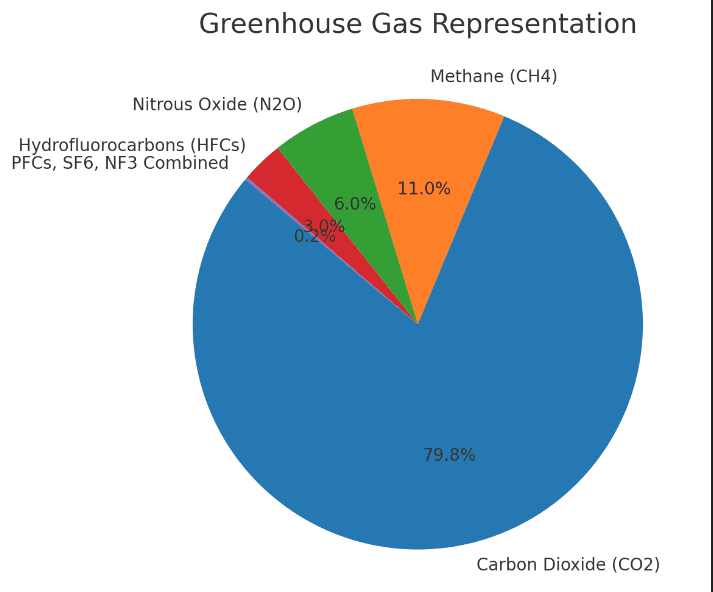
This is an approximate breakdown of greenhouse gases:
Carbon dioxide (CO2)—80%
Methane (CH4)—11%
Nitrous oxide (N2O)—6%
Hydrofluorocarbons (HFCs)—3%
Perfluorocarbons (PFCs), sulfur hexafluoride (SF6), nitrogen triflouride (NF3) combined—0.2%
Improving Our Future with Action
Both non-profits and the private sector have played pivotal roles in the fight against climate change, each bringing unique strengths and resources to the table. Non-profit organizations have raised awareness, influenced policy, and mobilized communities around the world, creating grassroots movements that emphasize the importance of protecting our environment. Meanwhile, the private sector has taken significant steps to reduce emissions, develop sustainable products, and invest in clean energy innovations. Together, these efforts represent a powerful commitment to safeguarding our planet and improving the quality of life for future generations. Through continued collaboration and shared responsibility, both sectors can drive lasting, positive change for our global environment.
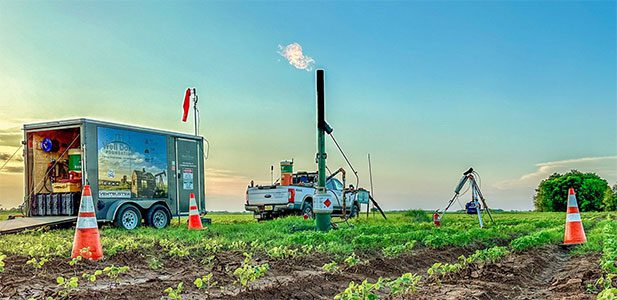
We continue to fight climate change and focus on reducing methance, CO2 and other greenhouse gases and we welcome you to either sign up for your newsletter (bottom of our page), or consider donating to help plug abandoned and orphaned wells! Oh, and please spread the word about us!